
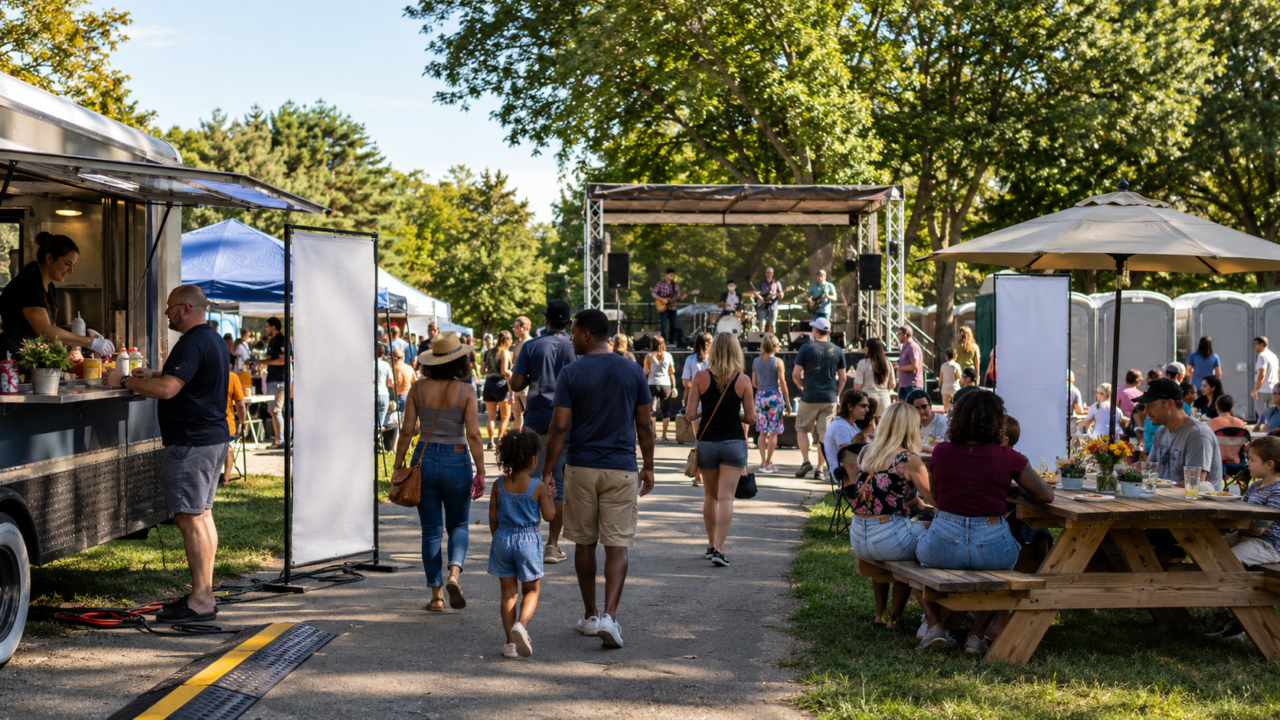
Picture a perfect sunny Saturday. The food trucks smell amazing. The local indie band is tuning up. Hundreds of neighbours walk through the gates. Then a food vendor plugs in a heavy commercial deep fryer and blows the circuit for the entire west side of the park. Total silence. Cold food. Frustrated attendees.
Big-ticket items like securing permits and booking entertainment usually get handled months in advance when planning a community event. The invisible details are what actually make or break a community gathering.
Power distribution is notoriously tricky. A single coffee cart pulls more amps than a standard residential kitchen. Mapping out exact power requirements for every single vendor prevents disaster. Skip the cheap construction generators that drown out conversations. Source whisper-quiet inverter generators instead.
Connectivity is just as urgent. Cashless payments dominate local markets. If food trucks cannot process cards because local cell towers are overloaded, lines stall. Hungry people simply leave. Setting up a dedicated commercial network using equipment like Ubiquiti Wi-Fi ensures vendors can process transactions smoothly while keeping the operational team connected via digital radios.
Signage That Actually Works
People rarely read small text when walking. They definitely don’t read it when managing toddlers and carrying heavy bags. Event maps printed on standard letter paper simply vanish in a crowd.
Signage needs to be massive. Strategically placed outdoor banners at every major intersection of the venue eliminate confusion instantly. Place one large map at the entrance, one near the food zone, and one by the restrooms. Use huge fonts. Choose highly contrasting colours. A good rule of thumb is simple. If someone has to ask a volunteer where the bathroom is, the signage failed. Proper wayfinding keeps crowds flowing naturally. It prevents annoying bottlenecks near high-traffic areas.
The Ugly Necessities When Planning a Community Event
Nobody wants to talk about garbage. Yet it remains the number one complaint on post-event surveys. Crowds generate an astonishing volume of trash. A single standard garbage can fills up in under forty minutes at a busy summer festival. Once a can overflows, attendees just start leaving sticky cups on tables or dropping napkins on the grass.
The solution is straightforward. Order three times as many trash receptacles as originally planned. Hire a professional crew to empty them constantly throughout the day. Volunteers should not be managing hazardous waste.
The same logic applies to portable restrooms. The standard industry ratio is often one unit for every hundred attendees. Cut that ratio in half. Include fully accessible units. Add dedicated hand-washing stations stocked with actual soap and paper towels. A bad restroom situation guarantees families will leave early and never return.
Intentional Downtime and Memories
Constant stimulation burns people out quickly. A local festival packed with loud music and endless vendor rows feels overwhelming after just one hour. Attendees desperately need quiet zones to decompress. Creating shaded seating areas away from the main stage changes the entire dynamic of an afternoon.
Set up hay bales covered in soft blankets. Borrow extra picnic tables from a neighbouring municipal park. Erect simple pop-up canopies to block the midday sun. These designated recharge stations extend the amount of time families stay by several hours.
Memory-making requires a bit of staging, too. Everyone carries a high-definition camera in their pocket today. Physical keepsakes still carry real weight, though. Organisers who rent a photo booth with custom props give attendees a tangible memory to take home immediately. It acts as a built-in marketing engine. Those branded strips end up pinned to local refrigerators for the next 12 months.
Protecting the Volunteers
Volunteers are the lifeblood of any local gathering. They are also the very first to burn out. A highly common mistake involves assigning someone a six-hour shift guarding a bouncy house in the direct sun. Exhaustion sets in rapidly.
Break shifts into highly manageable two-hour blocks instead. Provide a dedicated volunteer lounge restricted from general admission. Stock it heavily with cold drinks, comfortable chairs, and premium snacks. When community members feel genuinely valued and rested, they smile more. They interact far better with guests. Most importantly, they actually sign up to help again next year. Treat the volunteer experience with the same care as the VIP guest experience.
Zoning the Sound
Acoustics rarely get enough attention during the planning phase. Putting a live band right next to the craft artisan booths creates instant friction. Vendors cannot speak to customers. Buyers walk away because the noise physically hurts.
Zoning the event space prevents this clash entirely. Map out high-volume areas and low-volume areas clearly. Keep the main stage isolated. Position the speakers pointing away from residential neighbourhoods to avoid noise complaints. A thoughtful layout respects both the performers and the local merchants trying to make a living.


No Comments