
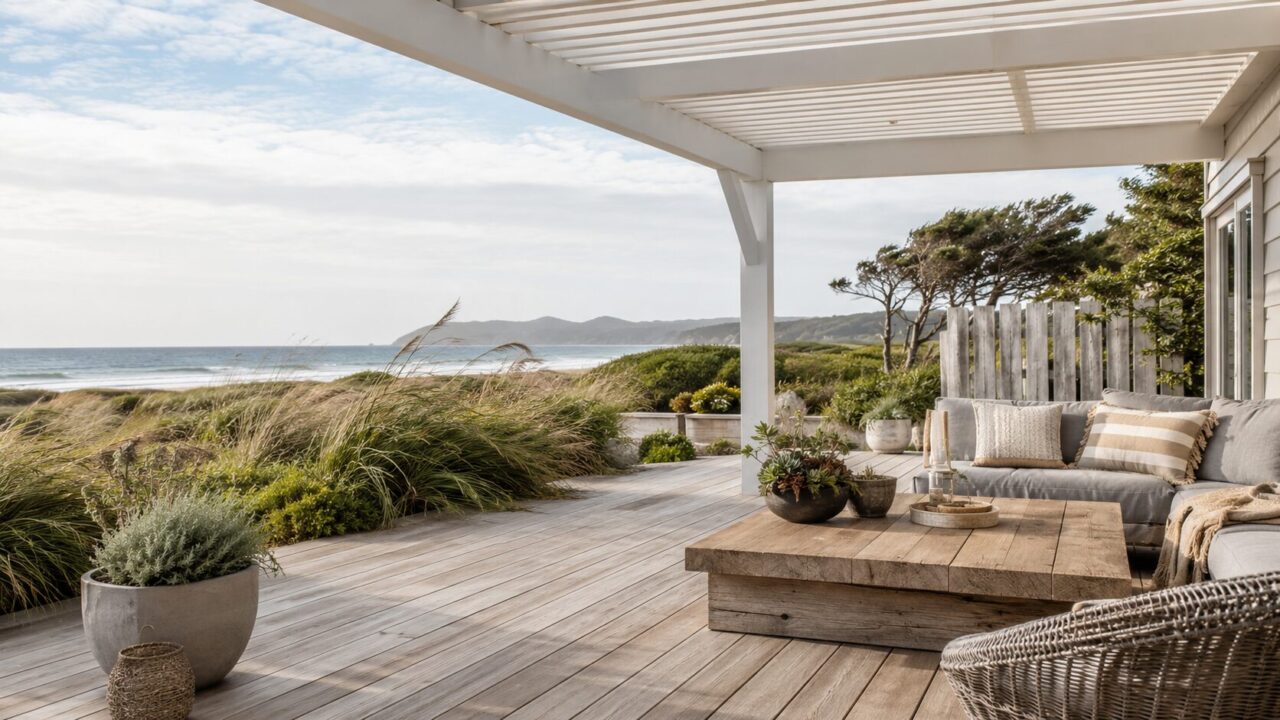
Start With the Wind
Coastal gardens may look peaceful in photographs. In real life, they can be surprisingly unruly.
Wind changes everything. It catches umbrellas, rattles loose screens and sends lightweight chairs sliding across patios. A pretty outdoor design setting can become irritating very quickly when half of it needs rescuing after every blustery afternoon.
That’s why wind should influence the layout before furniture, planting or decoration enters the conversation. Fixed benches, weighty tables and properly anchored shade structures are usually the safer choice. They may offer less flexibility, but they won’t attempt to leave the property during the first strong gust.
Total wind blockage isn’t always the answer, either. A solid wall can push air upwards and create turbulence on the sheltered side. Slatted fencing, layered planting and partially open screens soften airflow instead of stopping it abruptly. Much better.
Pick Materials That Won’t Surrender to Salt
Salt air gets everywhere. It settles on furniture, creeps into fittings and quietly speeds up corrosion. The damage often starts with the smallest details, such as screws, hinges and brackets, long before larger surfaces show obvious wear.
Outdoor areas around luxury Noosa accommodation, for example, need to cope with Queensland’s coastal humidity, strong sunlight and salty air while still looking polished for guests. The finished spaces may appear relaxed, but the materials behind that effortless look have usually been chosen with care.
Marine-grade stainless steel, powder-coated aluminium and properly treated timber tend to cope better than cheaper alternatives. Standard metal fixings can rust. Untreated timber can split. Low-quality coatings may peel or fade.
None of this sounds particularly glamorous. Still, rusty hinges aren’t glamorous either.
Surfaces should also be simple to rinse and wipe down. Salt residue builds gradually, so elaborate finishes with deep grooves or awkward joints can make basic maintenance more difficult than it needs to be.
Prepare Your Outdoor Design for Sun and Sudden Rain
Coastal weather has a habit of changing its mind.
An outdoor area may sit in full sunshine at lunchtime and take a heavy shower an hour later. Good design needs to accommodate both without requiring a frantic dash to move every cushion indoors.
Shade should follow the path of the sun rather than simply cover the centre of a patio. West-facing spaces often become uncomfortable in the late afternoon, even when a roof provides some protection overhead. Adjustable awnings, side screens and deeper eaves can block low-angle sunlight far more effectively.
Rainwater needs a clear escape route too. Slight falls in paving, discreet drainage channels and raised door thresholds help prevent water from pooling near seating areas or flowing towards the house.
And yes, outdoor cushions should be weather-resistant. They should still have somewhere dry to go. “Weather-resistant” doesn’t mean “happy to sit in a puddle for three days”.
Be Practical About Ground Surfaces
Outdoor flooring takes a beating near the coast. It faces wet feet, sand, salt, direct sunlight and sudden rain. Looks matter, but grip and durability matter more.
Highly polished tiles can become slippery when wet, making them a questionable choice around pools, showers or beach access points. Textured stone, slip-resistant porcelain and properly finished decking usually offer better footing.
In exposed spaces, composite decking panels can be a sensible alternative to natural timber because they don’t need regular staining and are less likely to splinter. Installation still matters. Boards need suitable gaps for drainage and ventilation, especially where humidity stays high and moisture can collect underneath.
Dark surfaces may look dramatic, but they also absorb heat. On a bright summer day, they can become unpleasant under bare feet. Very pale finishes sit at the opposite extreme and show every footprint, leaf stain and splash.
Mid-toned materials often work best. Not exciting advice, perhaps, but practical.
Let Planting Do Some of the Outdoor Design Work
Plants aren’t just decoration in a coastal garden. They can slow the wind, create shade and help exposed areas feel more private.
The wrong plants, however, won’t last long. Delicate species may struggle with salty air, sandy soil or repeated gusts. Salt-tolerant shrubs, hardy grasses and deep-rooted native plants usually cope better.
Layering works well. A mix of low ground cover, medium shrubs and taller planting filters wind more effectively than one rigid line of greenery. It also creates a softer, more established look.
Well-planned garden upgrades might include sheltered planting pockets, raised beds and tougher species in the most exposed positions. Local knowledge helps here because coastal conditions can vary dramatically within a short distance. A plant that thrives behind a sheltered wall may struggle badly at the front of the same property.
Large trees need careful positioning too. Roots can interfere with paving and drainage, while weak branches may become a concern during storms.
Design for the Maintenance You’ll Actually Do
Coastal outdoor spaces need maintenance. There’s no clever design trick that removes it completely.
The real goal is to keep that maintenance manageable.
Furniture arrangements should leave enough room for cleaning. Drainage channels should remain accessible. Metal fixings need occasional checks, and salt-covered surfaces benefit from regular rinsing with fresh water.
Materials that require constant sanding, sealing or repainting may suit someone who genuinely enjoys weekend maintenance. Most people don’t. Choosing simpler finishes from the start usually saves time, money and frustration later.
Storage also matters. Cushions, small accessories and loose furniture need a secure place during storms or long wet periods. Built-in benches with ventilated compartments can work well, provided water can’t seep inside.
The smartest coastal designs don’t pretend the weather will behave. They accept the wind, salt, sun and rain, then make every choice around them.



No Comments