
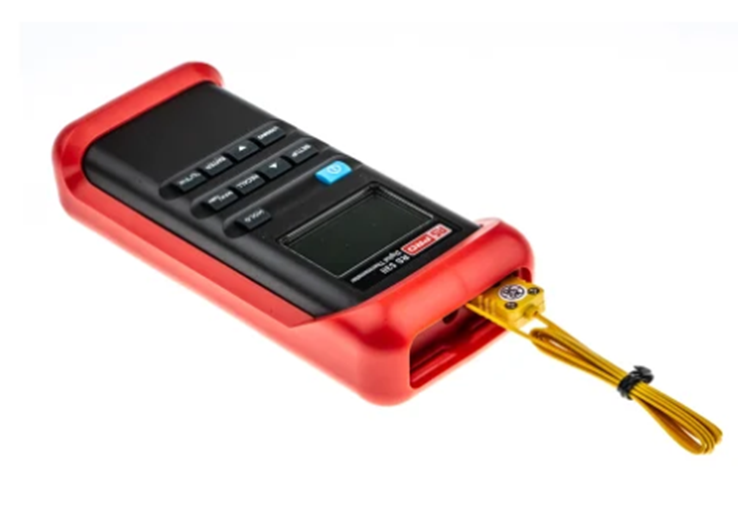
Temperature applications are far wider-ranging than most people realize. While we generally only associate temperature readings with things like food and wellness, there are temperature measurement tools of all kinds.
Choosing one can feel a bit tricky. That said, if you go into the process knowing what to look for, it shouldn’t be terribly hard to find the temperature measurement unit that fits your needs precisely.
Accuracy
Perhaps the single most important thing to consider when choosing a temperature measurer from a vendor like RS is its accuracy. Whether measuring body temperature, getting food temperature just right, or using a measurer for automotive uses, you need to have accurate readings each time or it will defeat the purpose.
Thermocouples can be a fine option and are usually a go-to because of how inexpensive they are. That said, they aren’t quite as accurate over time as something like a thermistor temperature probe. The latter is often accurate between -50C and +150C. If they happen to be glass encapsulated, they can be very accurate going all the way up to 250C. Don’t just go with the cheapest option because you may be giving up accuracy, which is the most important factor of all.
Application Environments
When choosing a temperature measurement tool, it’s essential to consider the specific environment in which it will be used. Different applications — whether in food production, medical diagnostics, automotive systems, or industrial manufacturing — place unique demands on sensors. Factors such as exposure to chemicals, moisture, mechanical stress, or extreme temperature fluctuations can all influence the performance and longevity of a sensor.
In environments that demand rugged, high-performance sensors, it can be useful to explore options from a Temp-Pro industrial temperature sensor manufacturer, where sensors are designed with durability and accuracy in mind for industrial-grade use.
Temperature Range
Right up there with accuracy is the temperature range. When implementing your temperature measurer, you don’t want to be limited by the range. While it might be fine for specific purposes, you ideally want to purchase a thermometer to use across a wider range of temperatures, making it far more versatile.
Depending on the thermometer you consider, you will come across different temperature ranges. NTC thermistors, for instance, can go from as low as -50C all the way up to 250C, making them more ideal for a broader range of applications. Thermocouples are quite common, but they tend to be less accurate with lower temperatures. That said, they are capable of going up to 2000C in some cases.
Size/Packaging
This is a critical thing to pay attention to. The packaging style can differ depending on what the application may be. For instance, a threaded stud might be used when it comes to general purpose applications, making it more ideal for casual uses.
There are also closed tubes, which are great for applications where liquid measurements are required. When it comes to surface sensing, ring terminals – or thin round metal stampings – would do perfectly fine. Again, this is where it is important to know what your intended use of the temperature measurer will be ahead of your search. Otherwise, you may come to think that a particular unit is fine, but it won’t be quite suitable.
Stability
For something like clinical or industrial use, you need to consider how long the operation will go on. If the answer is “long term,” then it can have an impact on what kind of temperature sensor that you would use. Over time, temperature sensors tend to become less effective. It all comes down to the materials they are made of, their overall construction, and what kind of packaging they were made with.
Let’s take a look at a thermistor. Over a year’s time, it can change anywhere from 0.02C to 0.2C depending on one factor: is it hermetically sealed? Thermocouples, meanwhile, can change a full degree (1C-2C) over one year’s time. That might not seem like a large temperature range but where accuracy is concerned, it can have a drastic impact on the readings that you attain. Even still, a thermistor would be a better option over long periods of time than its counterparts, the thermocouple.



No Comments