
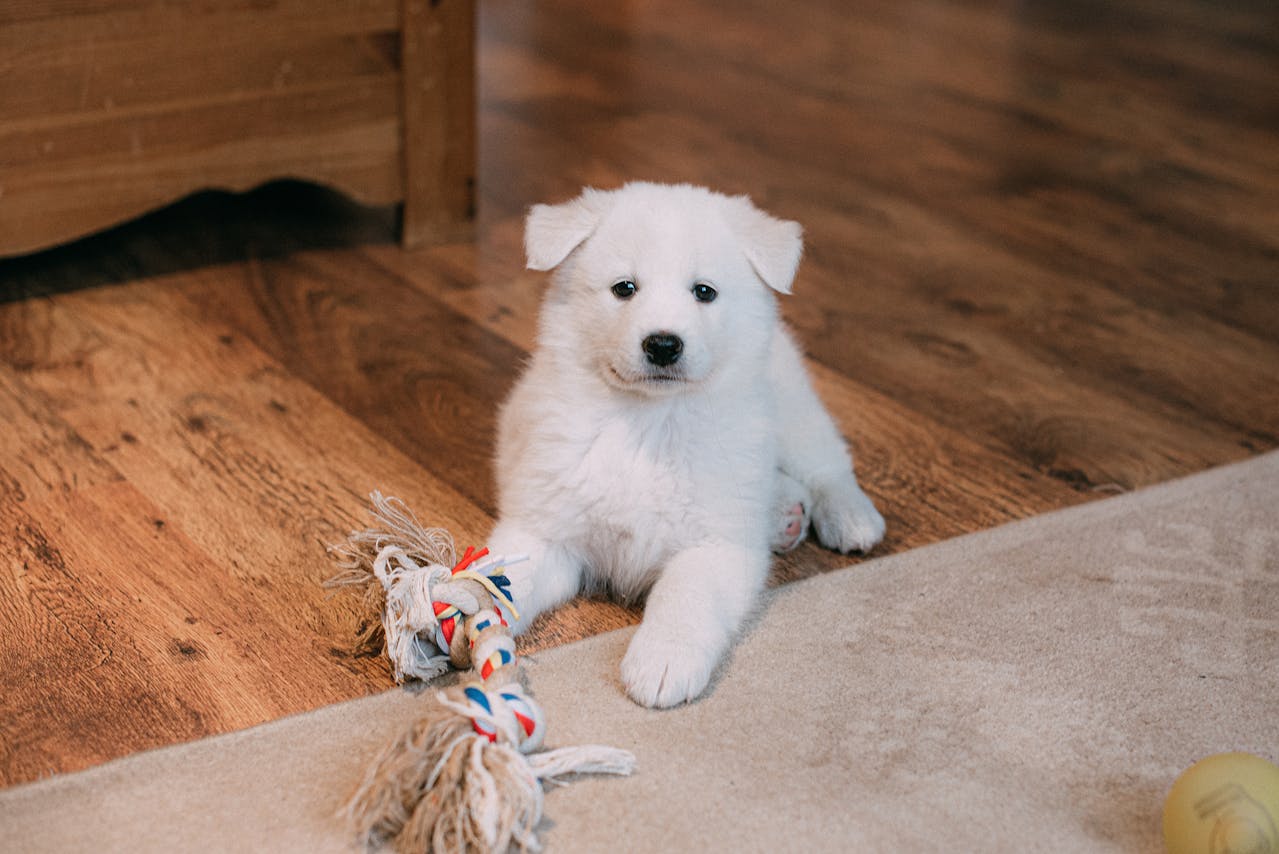
One of the first lessons you’ll learn as the owner of an adorable new puppy is how essential a dedicated puppy’s play area will be to your lives. Regular play provides a healthy outlet for your puppy’s natural energy, and it’s an important part of their development into a happy and well-adjusted dog.
Part of the journey entails teaching your puppy how to play properly—without barking incessantly, chewing furniture or hazardous items, or digging up your yard. For that reason, it would be a good idea to create a dedicated play area for them to exhaust their energy and let loose without any danger to them or to the rest of your home.
Consider the following tips to keep the area safe, clean, comfy, and ultimately conducive to puppy playtime:
1) Use Gates and Physical Barriers or a Playpen to Keep Your Pup Secure
Puppies are naturally curious, often venturing into areas that could be dangerous or unsuitable for them. You’ll want to put up gates, physical barriers, or a playpen to delineate your play area, thus keeping your pup secure while giving them freedom to explore their surroundings. Aim to keep your puppy from wandering into hazardous areas—like staircases, kitchens, or rooms with delicate furniture—and make an early effort to teach them the boundaries that foster good behavior early on.
Install baby gates or portable fences that are high enough to prevent your puppy from jumping over them. Gates with small slats or mesh designs are ideal for smaller breeds, as this will reduce any chances of escaping.
If space is a concern, you can invest in a playpen for your puppy. Playpens are portable and can be placed in any room, making it easy to change the location of your puppy’s play area as needed. Just make sure that the playpen is large enough to give your puppy room to move around and explore, but still secure enough to keep them contained.
2) Create a Dedicated Rest Spot in the Play Area
Puppies need a lot of sleep—often up to 20 hours a day—which makes it a good idea to set up a dedicated rest spot within their play area. Here, they can nap and recharge between bursts of energy.
Choose a quiet corner of the play space where your puppy can feel safe and undisturbed. Place a soft, comfortable bed or crate with custom dog blankets in the play area to make the rest spot feel cozier to them.
Ensure that the bed or crate you’re getting is large enough for your pup to stretch out in, but snug enough to offer them a sense of security. You can also include soft toys or comfort items that your puppy enjoys cuddling with to help them relax and stay calm when it’s break time.
3) Provide Them with a Variety of Dog Toys
Of course, what’s a play area without toys? You’ll want good ones to serve as appropriate outlets for your puppy’s energy so that they can ignore anything else that shouldn’t be scratched up or chewed.
Good toys will not only offer mental and physical stimulation; they’ll stave off boredom for longer and keep your puppy entertained for longer periods. It’s also important to provide a mix of toys that cater to their need to chew, tug, and explore, and to ensure that these toys are all safe and non-toxic.
Look for durable options made from materials that can withstand chewing. Soft plush toys with squeakers are great for comfort and entertainment, while tougher rubber toys are perfect for puppies who love to gnaw. You can even fill some toys with treats to provide a rewarding experience as they play. Puzzle toys, which require your puppy to figure out how to access a hidden treat, will appropriately challenge your pup’s problem-solving abilities.
Be sure to rotate toys every few days to keep things fresh and exciting for your puppy. In addition to leaving them be with their toys, make time to actively play with them using their favorites—for example, having a few daily rounds of fetch with their go-to rope toy or tennis ball.
4) Get Dog-Friendly Flooring for Your Indoor Puppy Play Area
If your puppy’s play area is indoors, make sure that you’re using the right flooring. Puppies are prone to accidents, spills, and rough play, and having durable, easy-to-clean flooring can save both you and them a lot of stress. Invest in the type of flooring that contributes to your puppy’s comfort and safety and reduces their risk of slips, falls, and joint strain.
A great option is rubber or foam mats, which provide adequate cushioning and traction. These materials are soft on a puppy’s developing joints and paws while offering a non-slip surface that helps prevent injuries during play. They’re also easy to wipe clean and resistant to moisture, making them ideal for handling any accidents.
Vinyl or laminate flooring is another practical choice, as it’s durable and easy to mop. However, make sure to add rugs or mats to provide some grip and prevent skidding. If you prefer the look of natural flooring, consider cork, which is both soft and sustainable.
Finally, avoid putting carpets in the play area. Save yourself the trouble, as they can quickly absorb dog odors and stains and be difficult to keep clean.
5) Place Pup-Friendly Outdoor Play Equipment
Outdoor playtime gives your puppy the opportunity to explore new textures, smells, and sights, all while engaging in healthy exercise. Don’t forget that you can make a play area for them outdoors as well as indoors.
If you plan to place your puppy’s play area outside, however, you should also provide pup-friendly play equipment so that they won’t dig up your plants or try to chew through their enclosure. It’s also important to choose outdoor equipment that’s safe, durable, and designed with your puppy’s size and capabilities in mind.
Start by considering a small agility setup with items like tunnels, ramps, or low hurdles. These are great for helping puppies develop coordination and problem-solving skills at an early age. Another idea is to add a sandbox where your puppy can dig, which is a natural instinct for many dogs.
Again, playtime encourages healthy development and good behavior from puppies, and a dedicated play area will facilitate that for you and your fur baby. Try the tips mentioned above to create the perfect play space for them.
Photo by Tanya Gorelova



No Comments