
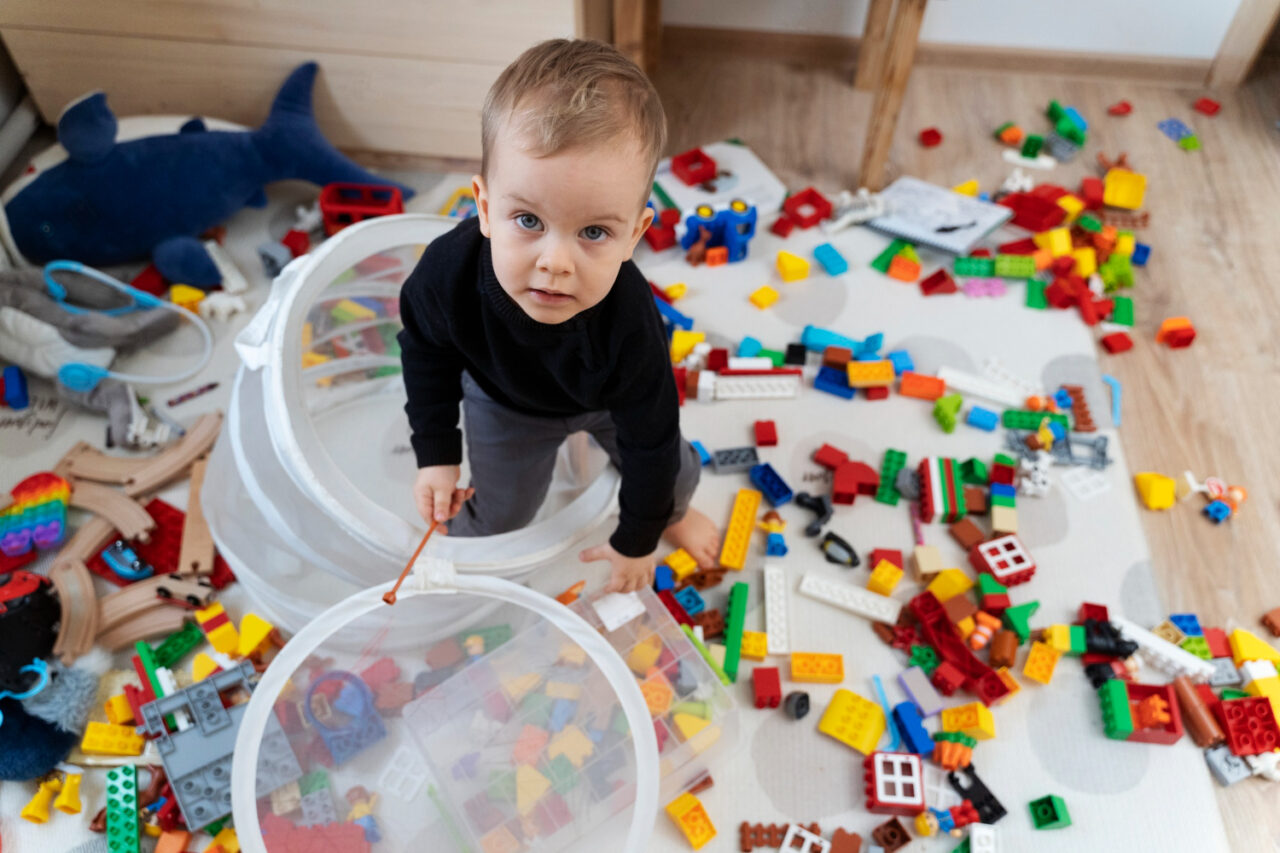
Having young children often means an abundance of toys in every room of the house. From stuffed animals to building blocks, it can feel like your home is overflowing with toys. While it’s wonderful to see your kids enjoying playtime, managing the clutter is important to maintain a tidy, stress-free living environment. If you’re struggling to contain the toy overflow, here are some practical tips to help keep your home organized and manageable.
-
Declutter Regularly
One of the most important steps in controlling toy clutter is to declutter regularly. Children often outgrow toys, lose interest, or receive new ones during holidays and birthdays, making it essential to rotate out old or unused items. Regularly go through your children’s toys and remove items they’ve outgrown, donating them to charity or selling them online. This will keep their toy collection manageable and make room for new, age-appropriate toys.
If you can’t part with any of their toys for sentimental reasons or because they still play with everything, consider creating a toy rotation system. Instead of having all the toys out at once, create a system where only a few toys are accessible at any given time. Store the rest in bins and switch them out every few weeks. This not only reduces clutter when your home is overflowing with toys but also keeps the toys feeling new and exciting for your children.
-
Set Up a Garden Playhouse for Extra Storage
Decluttering is the first step, but even after this, you’ll still find you have a lot of toys in your living space. Instead of letting toys take over, start utilizing your outdoor space for storage. A garden playhouse not only provides a fun place for your children to play but also serves as an excellent solution for storing a bulk of their toys outside the house.
Getting UK Garden Buildings to build you a garden playhouse means you have the perfect spot for keeping outdoor toys, larger items, and even some indoor toys that tend to create clutter. Include shelves, bins, and hooks to keep it organized out here. The other perk of having a playhouse in the garden is that it encourages your children to spend more time outdoors. They can engage in imaginative play in a space that feels like their own, giving them the freedom to play without worrying about indoor mess.
-
Organize Toys by Category
Organizing toys by category can make cleanup easier and help your children develop good habits when it comes to putting things away. Use bins, baskets, and shelves to create a designated place for each type of toy. Some ideas include:
- Labeled Bins: Have clearly labeled bins or storage containers for different toy categories such as “Legos,” “Dolls,” or “Craft Supplies.” Labeling helps both you and your children know exactly where things belong.
- Open Shelving: Invest in open shelving units where bins or baskets can be easily stored. Open shelving makes it easy for kids to see their toys and access them independently.
- Toy Hammocks or Hanging Nets: For soft toys like stuffed animals, consider hanging toy hammocks or nets on the walls to free up floor space while keeping toys accessible.
-
Limit the Number of Toys
One of the simplest ways to reduce toy clutter is to limit the number of toys that come into your home. Be mindful of the toys you purchase or accept from family and friends. Try this new strategy: For every new toy that enters the house, donate or sell an old one. This keeps the overall toy collection in check and encourages thoughtful decision-making. Or talk to your friends and family about wanting to limit the number of toys they get for special occasions. Suggesting experience-based gifts like museum memberships or activity classes instead of physical toys can give your children core memories and help them explore more of the world in a different way.
-
Create Toy-Free Zones
To maintain a sense of calm and order in your home, establish certain toy-free zones. For example, you might designate the living room or dining room as areas where toys are not allowed, while the playroom or your child’s bedroom can be dedicated play spaces. This helps limit the spread when your home is overflowing with toys and creates clear boundaries for where playtime should happen.


No Comments