

This is a guest post
As a child, I was quite anxious. Long story short, this comes down to the fact that when I was five, my dad had an accident that left him paralyzed for life. This meant that I was often separated from one or both of my parents and left with other family members for long periods of time.
Naturally, I developed separation anxiety.
I would feel this when away from my mum, dad, nan or my cousin (at the time, also my best friend). Of course, I was always distant from one or more of these people, so there was no winning. Twenty-six years later and I find myself a father no longer living with my children and in turn thinking about my experiences with SA from childhood to present.
Who is at Risk?
You see, although not recognized as a condition affecting both adults and children until recently; Separation Anxiety is more common in adults than people realise. It’s especially likely if:
- There’s a pre-existing history of mental illness.
- There’s a history of childhood trauma/tragedy.
- The sufferer has autism.
- The sufferer is a pet owner (and has a close relationship with said pet).
- There has been a life changing catalyst (childbirth, divorce, death, accident or a child leaving home for example).
The reality is that anyone can suffer from adult separation anxiety, however as with many conditions – some are at more risk than others.
Symptoms to Look For
With all this in mind and in the hope that it will help any fellow parents potentially suffering from the condition, here are some common symptoms of Separation Anxiety to be aware of:
- A constant need to know the location of the person attached to.
- Sudden or unexpected social withdrawal (usually to be with the person attached to).
- Complete lack of focus in the absence of the person separated from.
- An irrational or unproven fear that harm will befall the person separated from.
- Obsessing, fixating and worrying about being alone.
- Impaired function at work.
- Distress and discomfort when known that separation (even temporarily) will occur.
- Distress and discomfort when separation (even temporarily) occurs.
These symptoms will lead to the sufferer experiencing intense feelings of anxiety, irrational or unpredictable behaviour and the possibility of panic attacks. Other symptoms which might occur (and are more systematic of genital anxiety) are headaches, nausea, bowel distress, stomach cramps and insomnia.
Seek Help
If any of this sounds like you, my advice is to seek support immediately.
Start with a friend or family member you can talk to if that’s an option. Explain what’s going on and how you are feeling. Whether this is a possibility or not though, ultimately you will need to seek medical help. Your doctor will likely refer you to behavioural therapy (either CBT, cognitive behavioural therapy or DBT, dialectical behavioural therapy), a support group with other sufferers and/or medication to help calm you in the short term. None of this is anything to be ashamed of and it takes bravery to take those first steps.
Author bio
I’m a Kent (UK) based parenting, lifestyle and mental health blogger. I’m Dad to two wonderful (if not challenging) children and do what I do to get by. My favourite colour is green and I strongly dislike (though tolerate) tomato.

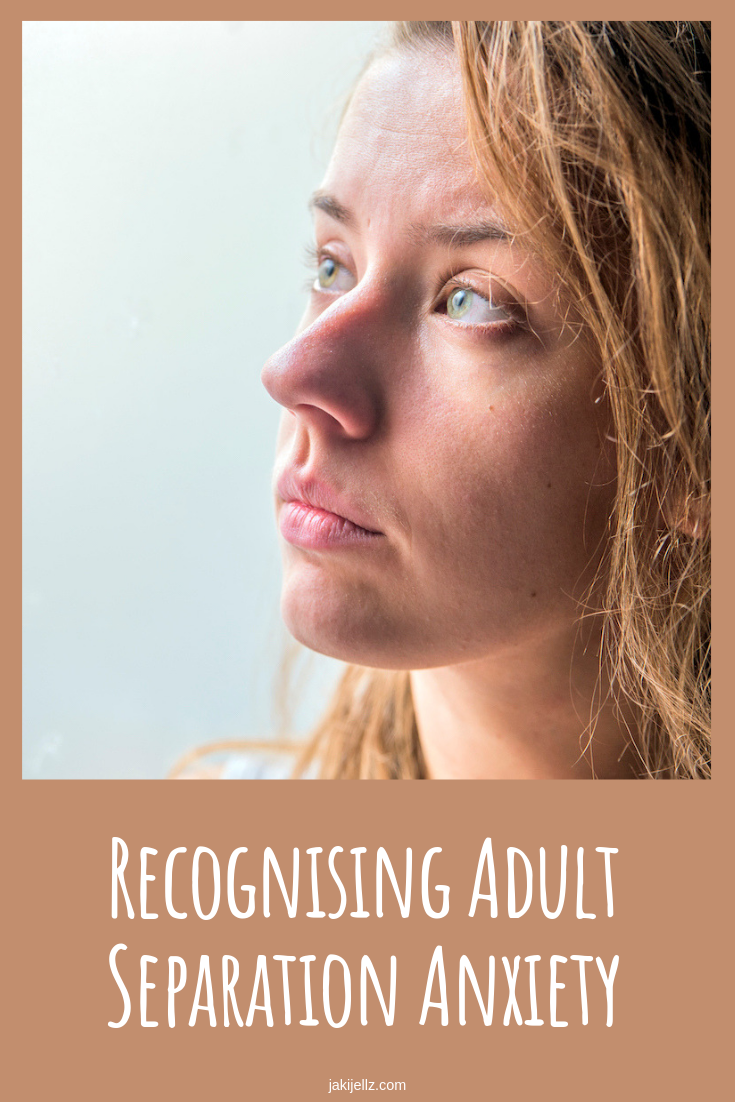
Did you like this post? Why not Pin it?



2 Comments
I hadn’t really thought about separation anxiety in adults before but it does make a lot of sense. This is an interesting post. #TriumphantTales
It’s not something I would normally think of adults suffering from, only children. We tend to forget about adults being able to suffer from similar things don’t we #TriumphantTales (sorry for the late comment)