
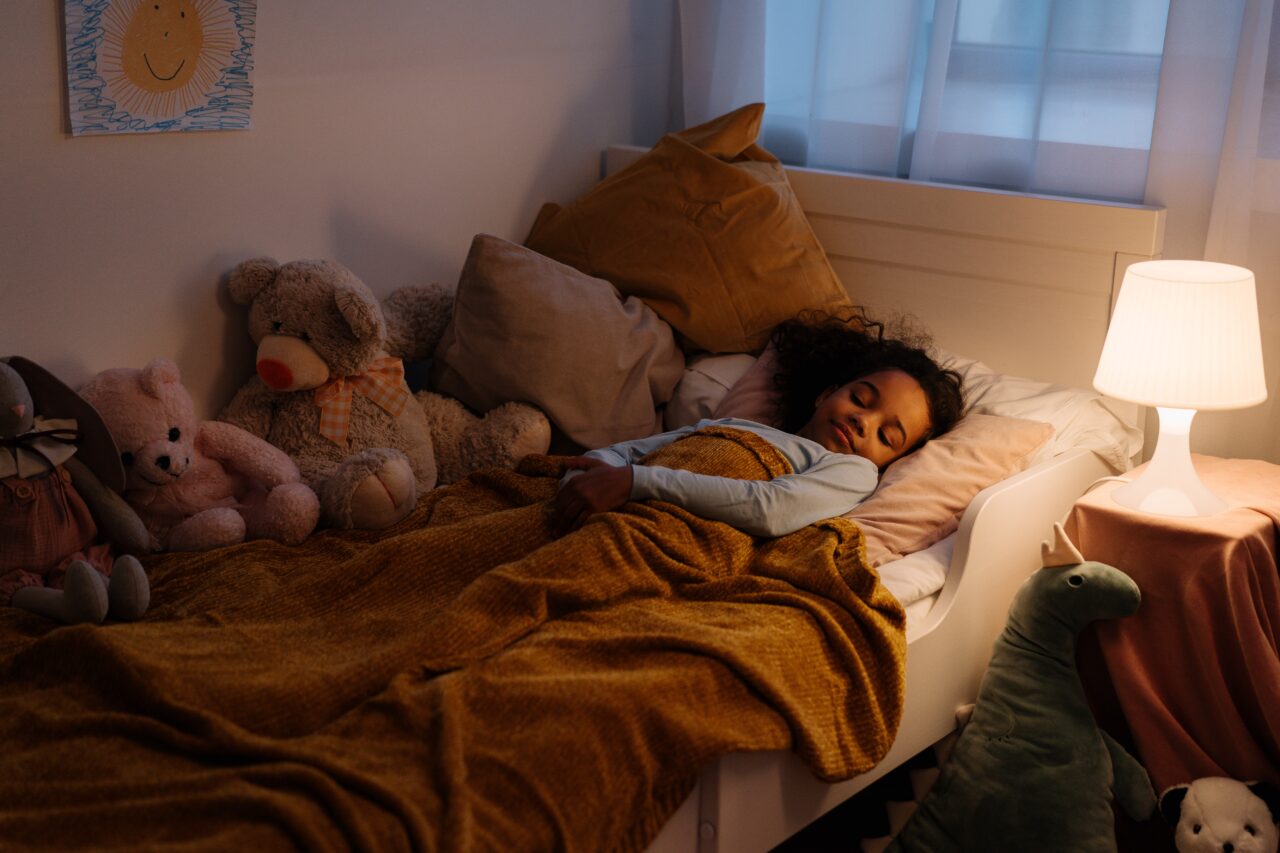
As parents are run ragged by the expectations of life, work, and parenthood, we can sometimes lose sight of how important a great night’s rest is for our little ones too. After all, they’re young, isn’t great sleep a given? However, life is hectic for all of us, and despite their young age, sleep problems are rising among children.
To give you insight into how important sleep is for your little one, we’ve provided some healthy benchmarks and tips.
What Does Great Sleep Look Like for Kids?
There are two factors to getting quality sleep: getting to sleep in the first place and then staying asleep. When a child has a healthy bedtime routine, they’re often better at waking themselves naturally in the morning, making your morning routine a whole lot easier.
Younger children will typically take about 20-30 minutes to fall asleep. This can be affected by how sleepy their bodies are, their daytime activities, and the bedtime routine you create.
It’s normal for children to wake during the night. Learning to fall back to sleep after a waking episode is a critical skill for their health and wellbeing.
Children’s direct sleep needs vary by age, from newborn through baby, toddler, pre-schooler, and school-age child.
Helping Your Child Get To Sleep
One of the very best things you can do for your child is develop a strong and positive bedtime routine. Having a set ‘wind-down’ period helps encourage better sleep habits and makes it easier for an active child to learn to get into the sleep mindset. Likewise, avoiding the struggle of a combative sleep routine is easier on both parent and child.
A bedtime routine can be as simple as a bath, story, and bed. Older children may like to unpack the day with you and spend some time relaxing alone in their bedroom. You can also build some early childhood-appropriate mindfulness routines into this set schedule, creating a tool they’ll be able to use to great effect as they age. If you’re not sure where to start building a relaxing wind-down routine for better childhood sleep, there’s a host of fantastic helpers out there, including bedtime companions who can assist your child with self-soothing during wakeful episodes, and even give you, the parent, some valuable feedback on what makes your little one tick.
Providing a comforting transition from toddlerhood to childhood can be achieved by considering a suitable single bed for kids. This thoughtful upgrade not only offers a sense of growing independence but also ensures a cozy and secure sleep environment. By combining a single bed with other calming elements, such as a night light, you create a comforting space that encourages a positive relationship with sleep, helping alleviate any bedtime worries your child may have.
Keeping a Regular Schedule
Another critical part of creating a smooth sleeping pattern for your little one is being consistent with bedtime and waketime. This may be difficult for parents with shifting work schedules, but keeping these key times within 1-2 hour windows, even on the weekends, helps regulate your child’s ‘body clock’ and encourages better sleep habits.
Most kids outgrow the need for naps between ages 3-5. If your little one is older, but still needs a daytime refresher, keep naps under 20 minutes, and avoid napping after the early afternoon hours.
Bedtime Security
It’s perfectly normal for a child’s active imagination to start conjuring nighttime worries, like monsters under the bed. But these can contribute to feelings of insecurity overnight that will have negative effects on their sleep cycle. Limiting their consumption of scary entertainment, from movies to computer games is helpful. A night light might also put some fears to bed.
However, a noisy and bright bedroom is incredibly distracting to young minds. Blue light, the type emitted by screens, can even suppress melatonin, the ‘sleepy hormone’, and keep them awake. In addition, an over-bright bedroom with extra stimulation through interactive toys that also rely on blue light can keep your child up.
Enforcing a ‘screen curfew’ an hour before bedtime, creating a soothing, dim environment, and keeping bedtime toys and distractions to a minimum will all help relax your child and create a greater sense of nighttime security.
Supportive Habits
A great night’s sleep doesn’t start at bedtime. Daytime anxiety can affect nighttime sleep quality as well. The same goes for not eating the right foods or eating at the wrong time. Eat too late, and the child will feel full and uncomfortable. Eat too early, or not enough, and they might get hungry at night. Moreover, you should watch out for caffeine and other stimulants in what you’re giving them, from medications to soft drinks.
Exposing your child to plentiful natural light during the day also helps regulate their circadian rhythm, the hormone cycle that helps cue appropriate wake and sleep times.
Combining these practices, both day and night can ensure a better bedtime. Thanks to this, a great night’s sleep will help your little one grow and thrive while making your life easier too.


No Comments