


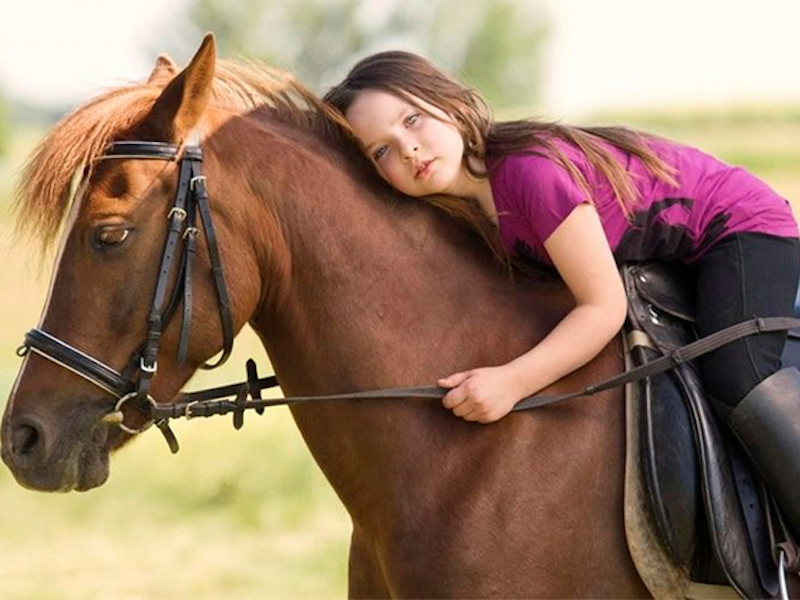
This is a guest post
Horse riding enthusiasts find a number of advantages in their spectacular riding hobby. In particular, the list of bonuses that are beneficial for the rider’s health includes:
- Higher metabolic rate;
- Improvement of the posture;
- Strengthening of core muscles;
- Prevention of musculoskeletal system disorder, etc.
Typing “health benefits of horse riding for horses” will also return the information on how it helps people. Even searching for «horse riding is cruel», will return 60% of people making excuses on why it is not. In this article, we will have a look at why it is actually so.
Mouth and Bit
A bit is an oral device for restraining and controlling a horse during the ride. Bits are made of iron rods that are connected to each other and attached to the bridle straps. Aside from direct pressure on the lower jaw, a traditional bit also has a strong effect on the hard palate of the horse. The bit covers the lower jaw like a vice and squeezes it when the rein is pulled. Thus, when the rider pulls the rein, it folds in half and pokes against the horse’s palate with its joint.
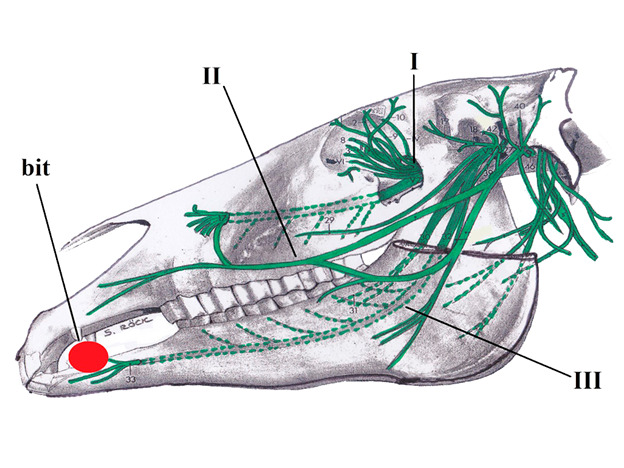

Neuralgia starts to develop when pain signals caused by the bit (red circle) are referred not only to the brain (which is already bad enough) but also along from III to II (causing a facial pain) or from III to I (eye or ear pain).
The Trigeminal nerve stimulation with a snaffle bit is often classified as one of the kindest bit techniques. These devices act on a very small area of the horse’s head, that is all wired with nerves, that can generate an extreme amount of pain.
Bits can also cause the anaemia of the horse’s tongue. Especially during the long hours of intense training. The pressure created by the bit displaces a tongue to a very unnatural position. Thus, it will be a matter of time, until the tongue of the animal will turn blue due to the circulation loss.
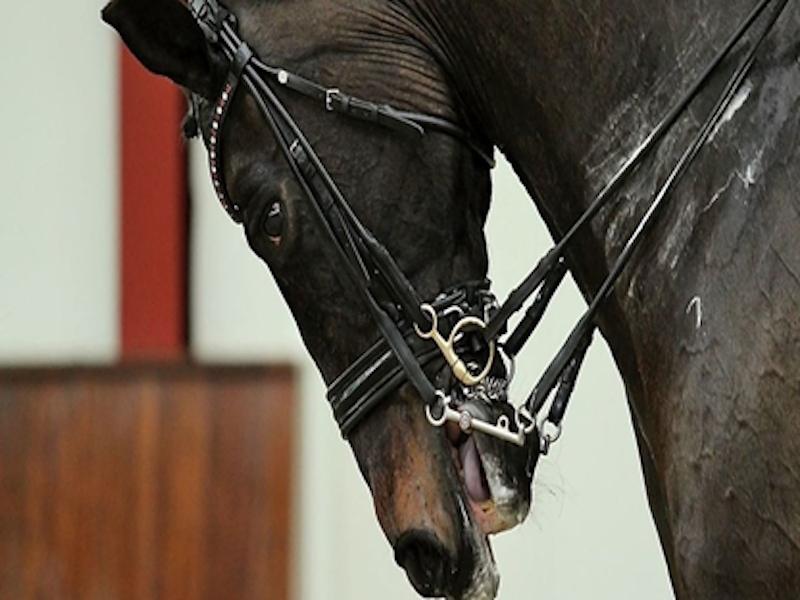

In addition, falling for horses is also a quite common part of their dynamic life. As a result, sooner or later the animal bites its tongue. And if a horse gets a bit placed in its mouth even after the slightest bite – a partial tongue tear is almost guaranteed. Besides, even a healthy tongue can always get squished between the bit and the gums, pressing against the jaw bone.
Back and Saddle
Weight of Saddle + Horse Rider
According to most riders, the saddle is a very important piece of horse equipment. They state that it is painful for the rider to ride without a saddle and especially on top of high riding horses. Some of these people also claim that it is the saddle that minimizes the pain on the horse’s back and rider’s butt, distributing the weight so as not to harm the horse.
It is easy to see the popularity and commonness of these opinions by visiting any website dedicated to equestrian sports or horse ridings. However, these are wrong assumptions and here is why.
Weight of the saddle varies from 400 g (racing saddles) to 40 kg (marching saddles). Average weights of an adult horse and human equals around 450kg and 62 kg respectively. Thus, the weight that horse carries on its back by the most conservative estimates varies from 62.4 to 102 kg.
It is the same, as a 62 kg person standing, walking or running with additional weights from 0.5 to 5.5 kg. And to make this comparison maximally fair, that person would also have to be standing on all fours. Since unlike humans, horses are not upright walking mammals.
Anatomic Details
Famous Russian hippologist and ex-horse rider Alexander Nevzorov after conducting a number of researches on horse’s spinal muscles came to the following conclusions.
In spite of the fact that myology and muscle construction of mammals is almost the same, there are some nuances. So-called subcutaneous muscles of the horse, are the first ones that take the weight and the pressure of the saddle and rider. These are very thin muscles in which micro vascularization (the blood supply) ends within a time span of 10 to 15 minutes. 15 minutes at the longest. After this time mark feelings of discomfort will start. Microcirculation gets compromised and within 20 minutes a horse gets symptoms similar to what we get in our leg if we sit long enough in an awkward position. It leads to a slight sense of pain and a partial loss of control over the leg. And that is a clear signal of a serious circulation violation. Within 20-25 minutes the horse gets to the serious stage of anaemia and strong, gradual destructive processes in the muscle itself, that are quite dramatic from the point of view of the physiology.
That is exactly what every horse experiences under any type of saddle and with any weight category of the adult rider sitting above. But animals don’t have much of the choice. Because not only iron in the mouth, but also the rider creates a combination of a colossal and constant traumatic condition for the horse’s health. And the only way for horses to minimize the pain is to follow every command of the rider at all times.
Alexander Nevzorov states:
“A horse’s back is not a seat, not a place for a human butt, not a piece of “meat”, not some sort of “terra firma”. It is a very complex and tender anatomical structure with extraordinary functions. Besides the obvious biomechanical function, the back has another very important function. The spinal cord’s work is to guarantee that the responses from the entire nervous system can communicate the sense of taste, smell, vision, hearing, and vestibular function to the brain, not to get lost in too much detail. On this especially vulnerable, sensitive organ, onto the medulla spinalis the brain of the back, sits a rider.”
To All «Caring» and «Careful» Horse Riders
Any type of horse riding is extremely painful for horses of any size.
Unfortunately, the anatomy of the horse does not leave a person a single chance not to inflict a severe, pressing, compressive pain to the animal. Such aspects as sitting technique, the level of rider’s skills and the presence or even the absence of a bridle do not play a decisive role in saving the animal’s health while riding.
According to Nevzorov, he and his colleagues are not very vocal about telling the results of their long-proven research. Because they got convinced that when people find out how painful this hobby is for a horse, they begin to engage in it with even greater delight and passion. Not all people dare to make torture in the criminal sense of this word. Thus, some prefer to do it under the guise of some decency and beauty.
The horse is too naive, helpless and evolutionarily unadapted to study physiology and to explain to the rider the amount of the harm it gets from these ridings. And the rider is too selfish, uncompromising and lazy to look at the studies, to admit that his hobby is cruel, and of course to get off the horse.
About the Author
Zack Hargrove is a remote journalist. One of his missions is to notice interesting, unusual phenomena in the world of music, fitness, science and reporting it to a diverse scope of audience. His teammates from CheapWritingService.com are willing to provide you help with your resume in case you plan to change careers. You can find him on twitter @zackhargrovejr.